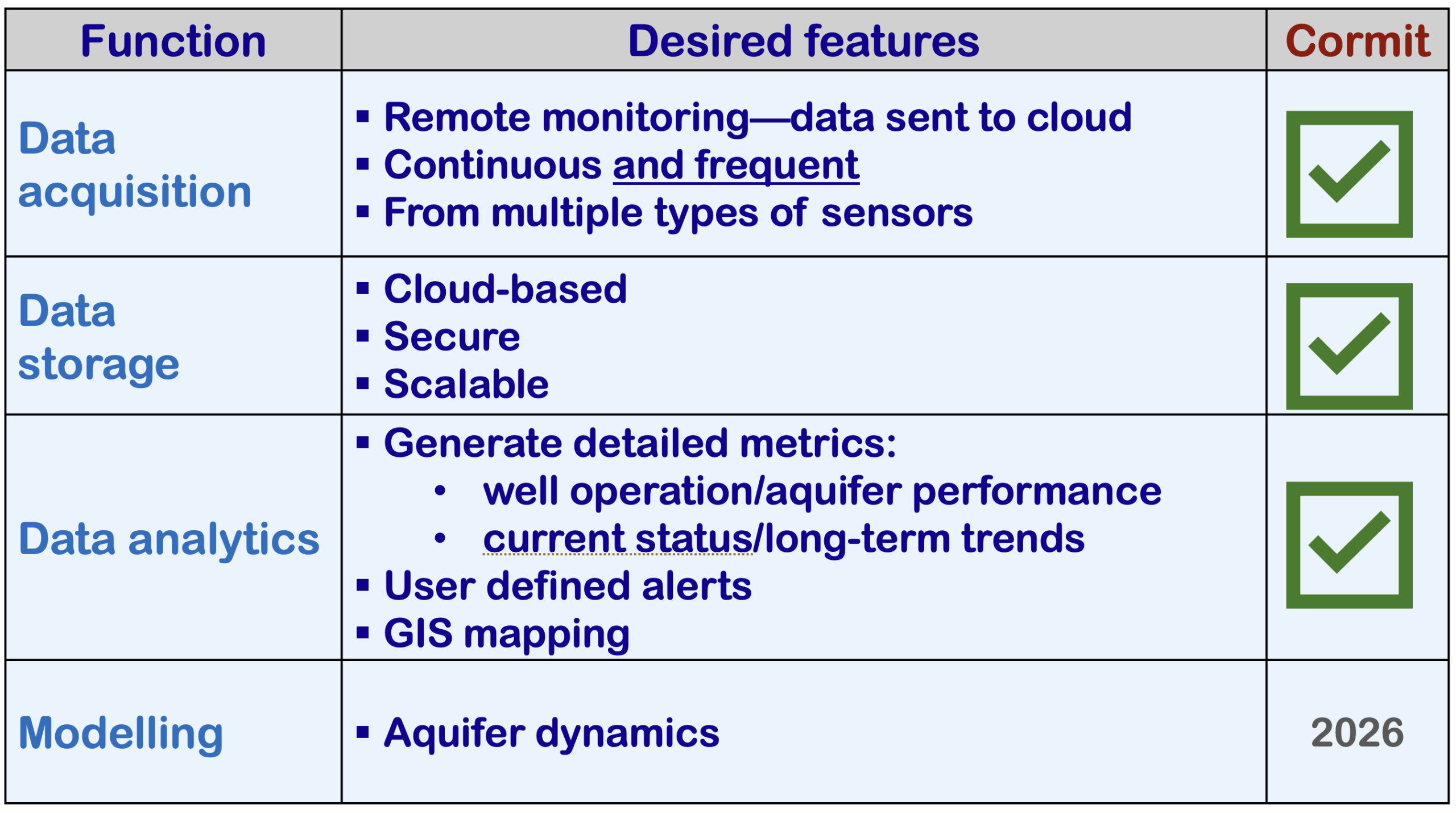
What makes a good remote monitoring system for wells/aquifers?
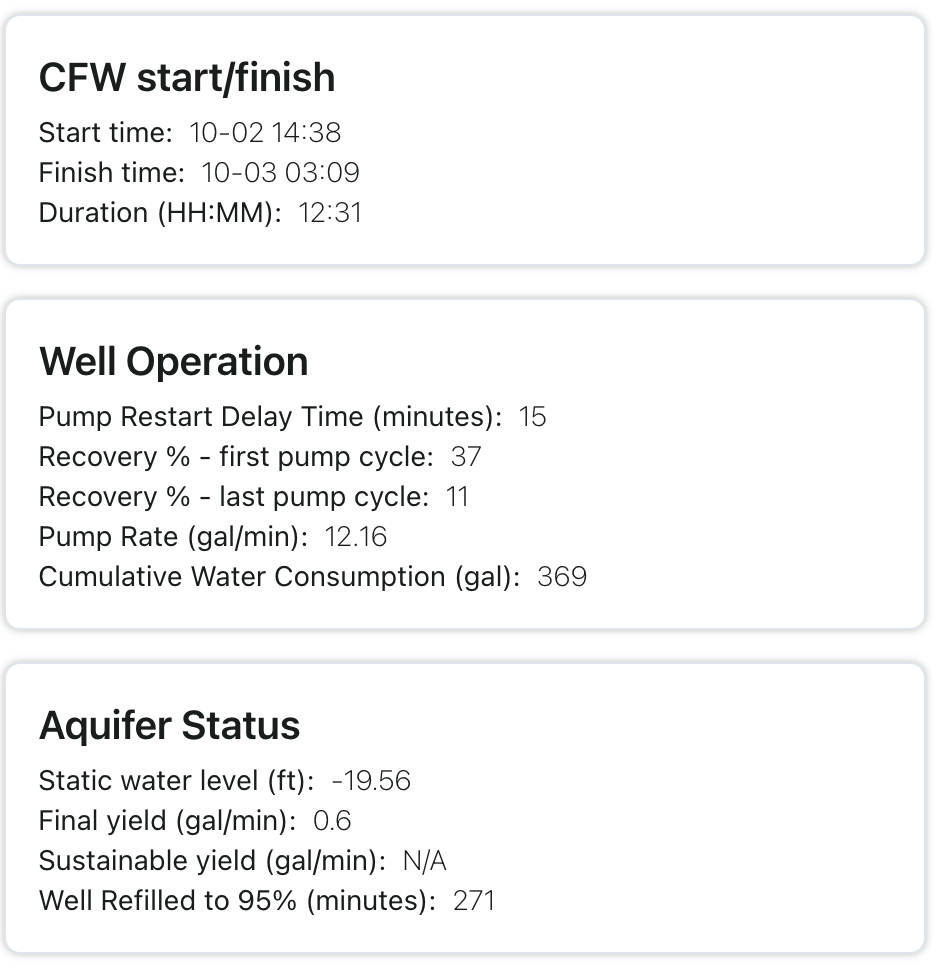
Well/aquifer metrics generated by Cormit for a cycling well
Summary metrics
for a CFW (call-for-water)
cycle
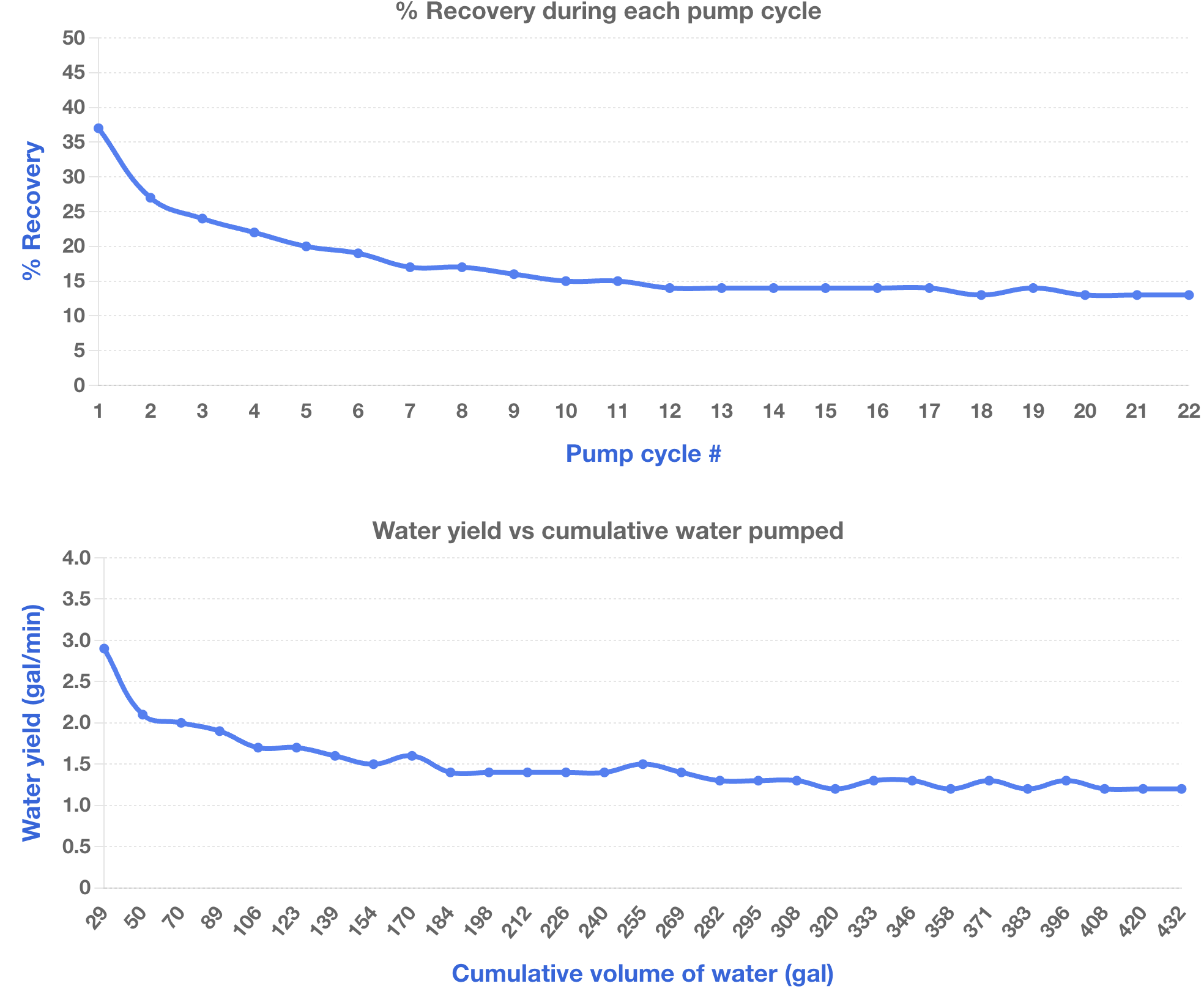
Aquifer performance —during CFW (pump cycles)
% recovery for each pump cycle:For each pump cycle during the CFW cycle, the graph shows the amount the well refills expressed as a percentage of the static water level (% recovery). Generally, the aquifer’s ability to deliver water to the pump declines as the pump continues cycling and then stabilizes if the CFW cycle progresses long enough.
Water yield over CFW cycle: Well output as a function of cumulative volume of water pumped during a CFW cycle. Generally, the well output drops and then reaches equilibrium level as pumping continues. The water yield after well output stabilizes is the sustainable yield of the well/aquifer system
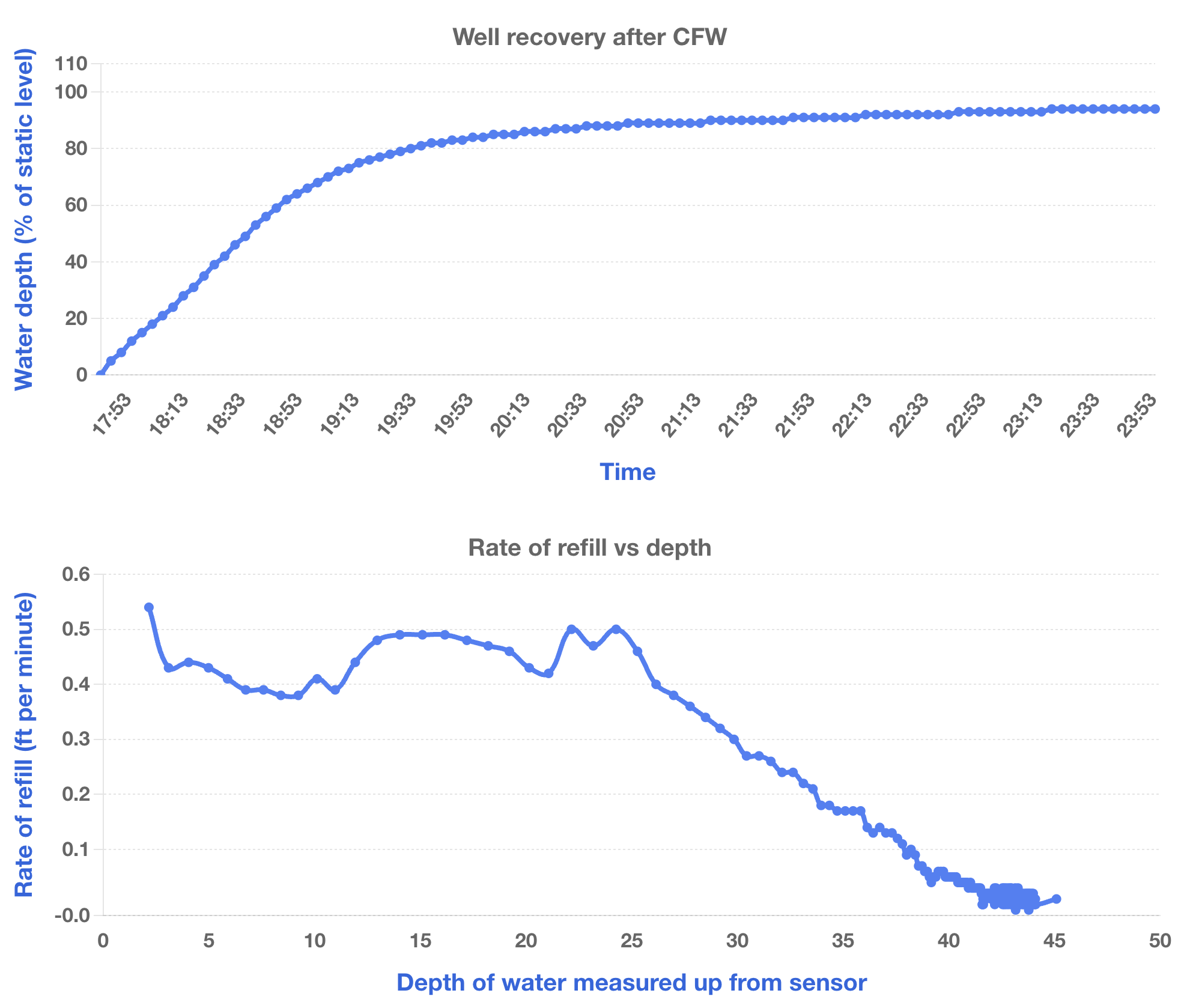
Aquifer performance—post CFW (well refills)
Refill after CFW: This graph shows the well refilling as a function of time after CFW ends. The refill is measured as the height of water in the well, expressed as a percentage of the static water level
If the refill curve starts out linear (straight line), it means the bottom of the aquifer is above the level of the depth sensor in the well. The point at which the initial linear segment ends and rate of refill slows marks the bottom of the aquifer.
Rate of refill as function of depth: This graph shows the rate at which the well is refilling after a CFW cycle ends as a function of the depth of water in the well.
The rate of refill is measured as as units of length per units of time (e.g., inches measured per minute). Initially, the rate will be high as the entire well is empty and there is no hydrostatic pressure in the well pushing back against water trying to enter the well. As the well fills with water and the depth goes above the bottom of the aquifer, hydrostatic pressure of the water in the well slows the rate of refill.
Long term trends
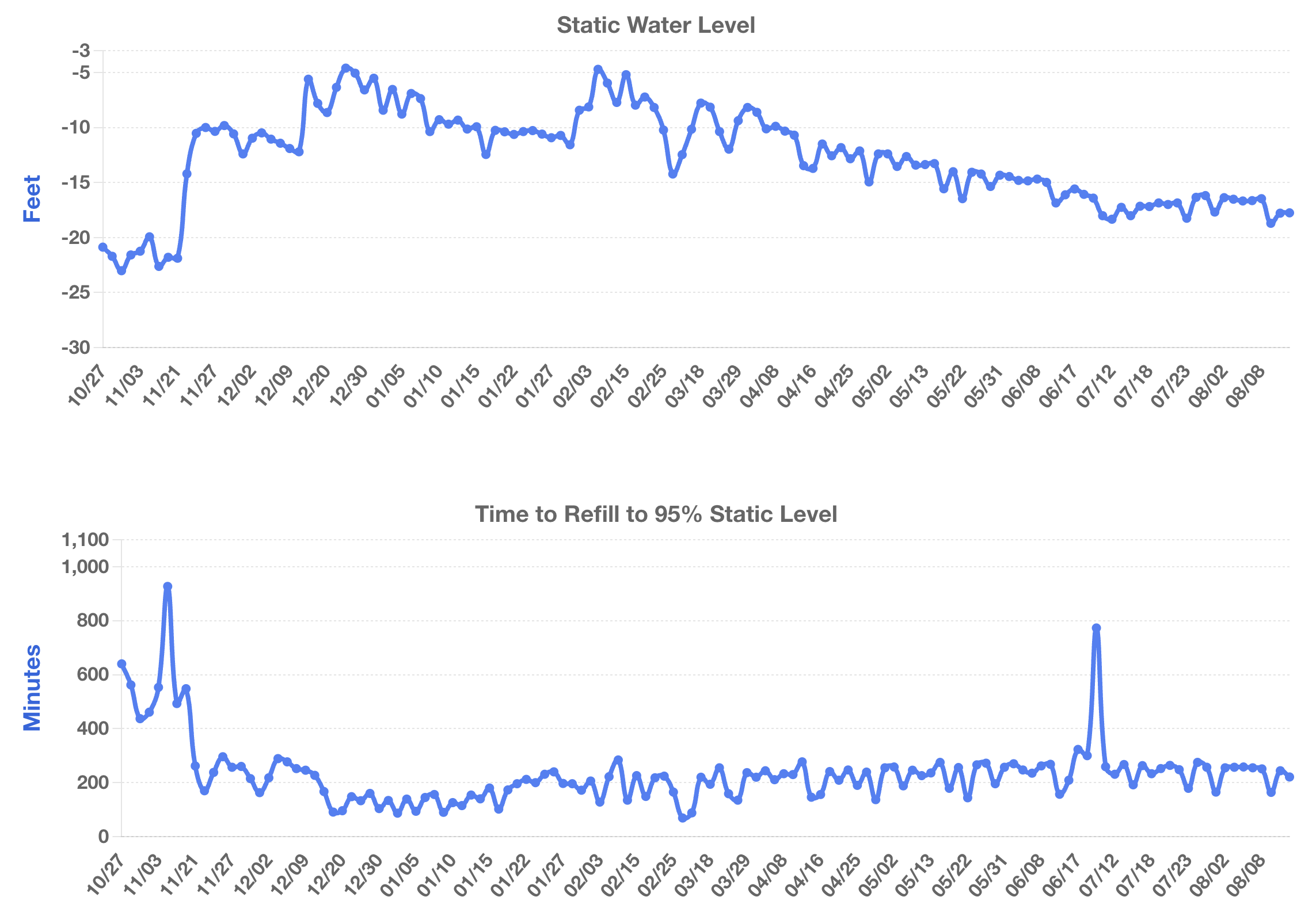
Trends over time in metrics: These graphs show long-term variations in two metrics. Data is for a shallow well in northern California where rainfall patters are highly seasonal. The period covered starts at the end of one dry season, goes through a rainy season, and then back through a dry season.
Static water level (SWL)—upper graph: SWL rises dramatically during multiple rain events during the winter rainy season and then drops down through the dry season.
Well recovery time—lower graph: Time for well to recover to 95% SWL after CFW ceases.At end of dry season (left side of graph) aquifer level is low and recovery time is long. During rainy season, when aquifer is much higher, recovery time is noticeably shorter.
Well/aquifer metrics generated by Cormit for all wells
Time-series (hourly, daily, monthly)
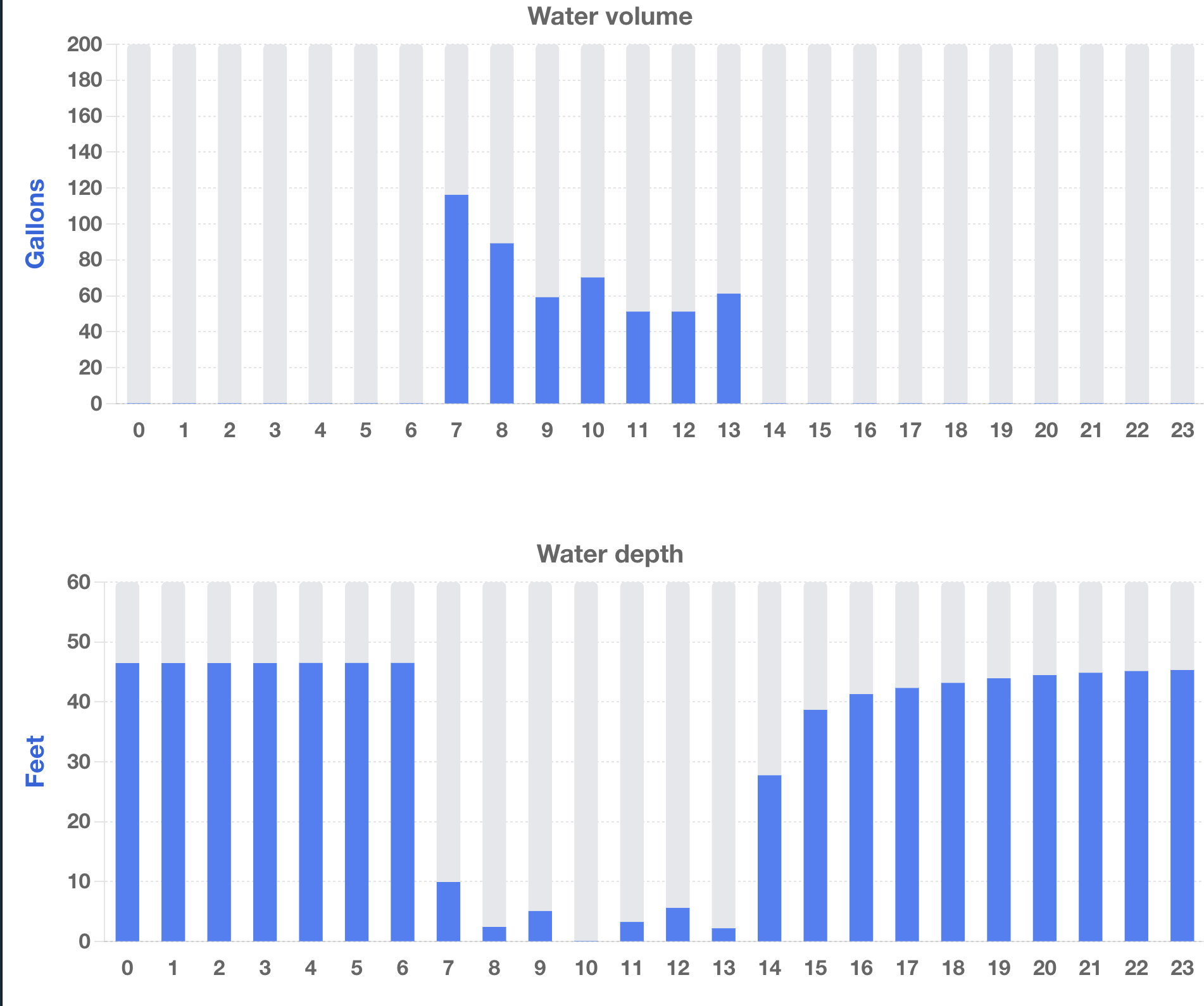
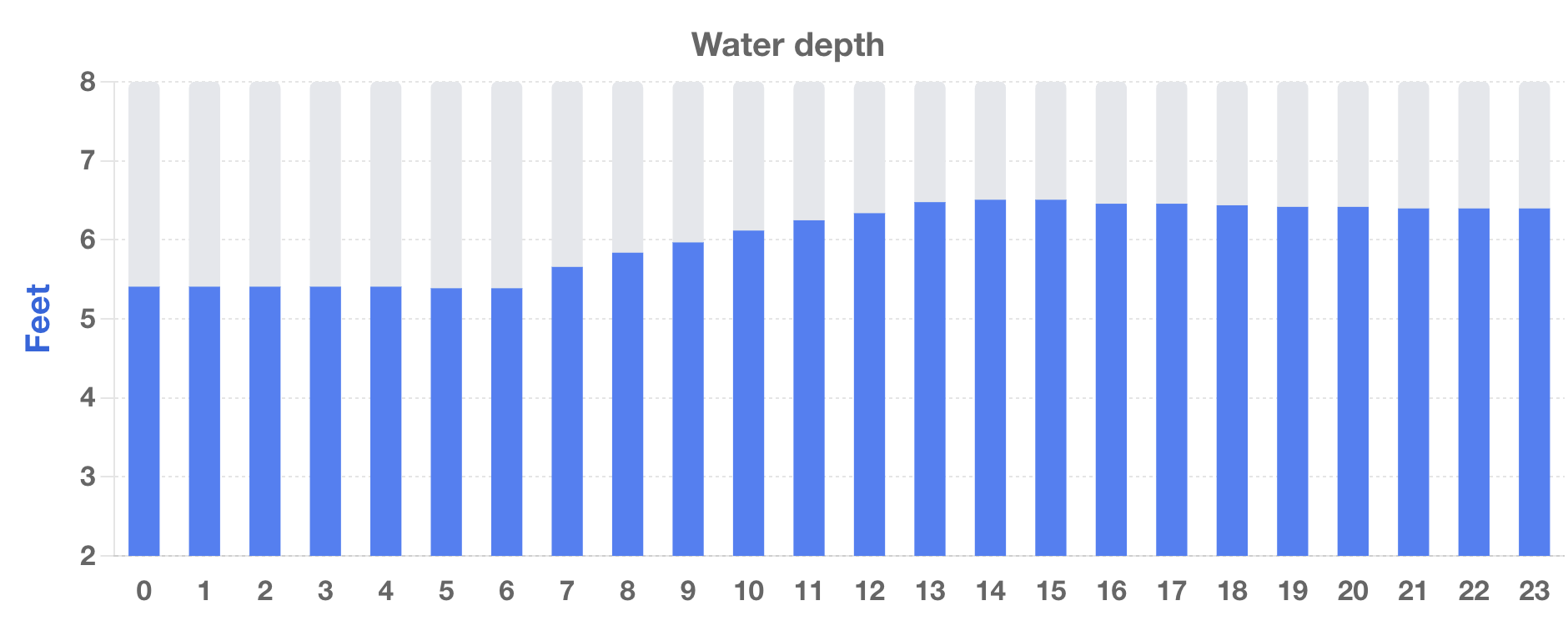
Tracking well and reservoir during CFW cycle: These three graphs show hourly data for well output, water depth in well, and water depth in reservoir over a day when a CFW occured.
Well output (top graph): CFW is initiated during hour 7 and continues until hour 13. Well production rate declines over this period.
Water depth in well (middle graph):Prior to CFW, water depth is at SWL, During CFW cycle, depth of water varies as pump cycles on and off. After CFW, well refills over a period of hours and approaches SWL again.
Water depth in tank (lower graph):Prior to CFW, level of water in tank drops as reservoir water is consumed. In hour 7, water level in tank has dropped to the trigger point for minimum desired level and CFW begins. In hour 13, water level in reservoir has risen to trigger point for maximum desired water level and CFW ends.